
和通社纽约讯 高级记者Fuank Liu 钟将岩
An Open Letter At A USA Crossroads: Why Generation Z Is Calling On Trump, Melania, Congress, Giants Hightech leaders Musk, Huang & Su family To Lead AI-Powered Campus Security
5 December 2025
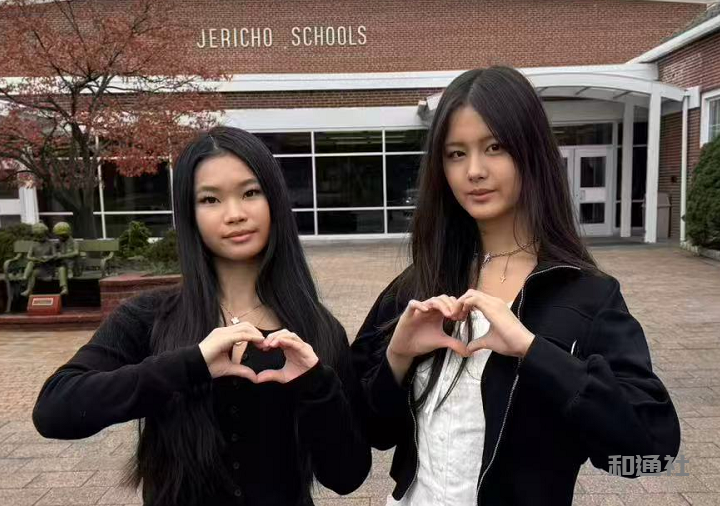
An open letter from two ninth-graders might seem like a small gesture against a prevalent national crisis, but Lydia Q. Lin and Eirene Hope Liu have chosen to aim their concerns toward the most powerful offices in American politics and technology—and they have done so in the language of both urgency and engineering.
Addressing President Donald J. Trump, First Lady Melania Trump, members of Congress, and tech titans Elon Musk and Jensen Huang, their proposal is as stark as it is specific: to harness artificial intelligence (AI) not just to drive markets or send rockets to Mars, but to keep dangerous weapons from ever crossing school territories. Lydia and Eirene write as youths who support “Making America Great Again” and insist that greatness now depends on the utmost safety of students, with them hopefully not being afraid of heading to school.
Two Ninth-Graders At A Crossroads
Lydia and Eirene situate their appeal at what they call a moral and political crossroads, invoking a campus stabbing of conservative speaker Charlie Kirk and two decades of school shootings as the backdrop to their fears. They pose a question that cuts through ideological divides: if the United States leads the world in AI, robotics, and advanced engineering, why can it not prevent weapons from entering schools in the first place?
In that tension between high-tech prowess and basic security, Lydia and Eirene carve out a distinct role for themselves: not as victims-in-waiting or passive students, but as visionaries in hoodies and backpacks. Lydia, who serves as Director of the YLDO Youth Business Council, brings a budding strategist’s mindset to the problem. Eirene, Director of the YLDO Youth Art & Fashion Council, approaches the same crisis with a creative lens, envisioning how design, communication, and symbolism can help shift entrenched institutions toward change.
Their vision is unabashedly ambitious. They call on the White House to link “Make America Great Again” with “Make America Safe Again,” arguing that a superpower unable to safeguard its children has forfeited any claim to moral leadership. At the same time, they are shrewd about power: they address Melania Trump as a potential champion for youth, invite Barron Trump as a peer to join their “Make America Safer” initiative, and place their letter firmly in the public square as “an open letter to the people of the United States,” not just a private appeal.
Designing An AI Shield For Schools
At the core of Lydia and Eirene’s proposal is a detailed vision for an AI-driven school safety system that inverts the current logic of campus security, shifting from a reactive to a preventive approach. They outline a four-part framework: federal funding to modernize school security infrastructure, deployment of AI-powered scanning systems capable of detecting concealed weapons before entry, proactive threat-detection mechanisms such as robotic patrol units, and a commitment to equitable access, ensuring that both rural and urban schools receive protection. This is not a vague plea to “use technology better,” but a blueprint that borrows the language of legislation and systems design.
In recent years, leading technologists, including Musk, have signed open letters warning about unregulated AI development and calling for “shared safety protocols” and stronger governance. By contrast, Lydia and Eirene press for a different kind of AI safety: systems engineered to prevent physical harm in the hallways where they and their classmates walk every day. They are not dismissing long-term concerns about AI; rather, they are insisting that America’s first duty is to prevent the next stabbing or shooting, not simply to debate speculative future catastrophes.
This focus on AI as a guardian, not just a disruptor, also reflects the philosophical bent of the World Harmony Foundation, the New York–based nonprofit ecosystem in which Eirene has emerged as a young creative figure. The foundation has long operated at the intersection of youth leadership, environmental stewardship, and diplomacy, positioning itself as a bridge between international institutions and emerging generations.
Within this framework, the teens’ unusual addressees come into focus. Musk and Huang are not only avatars of AI innovation, but also embodiments of the “giants” who, in Lydia and Eirene’s eyes, have the resources and influence to accelerate a “nationwide revolution in safety technology.” Their appeal to these leaders is as much moral as technical: if industry can build autonomous vehicles and foundational AI models, surely it can help engineer campus scanning systems and predictive patrols that make “thoughts and prayers” obsolete as a national response to tragedy.
From Global Harmony To Domestic Safety
If Lydia’s voice leans toward policy and systems, Eirene’s story emerges from a different but complementary trajectory: art as diplomacy and youth as moral witness. As a young Harmony Ambassador within the World Harmony Foundation network, she has already navigated spaces many adults never enter, from youth painting exhibitions connected to United Nations events to ceremonial artistic gifts for global leaders. In these settings, she has learned how visual symbolism can move people where spreadsheets and speeches cannot, a lesson that surfaces in her insistence that America’s security crisis is also an emotional and cultural wound.
The World Harmony Foundation itself has spent years championing harmony between humans and the natural world, elevating youth voices on climate and peace from UN conference halls to national media. Its model often pairs youth-led creative expression with concrete policy ideas, aiming to shift environmentalism and peace-building from lofty rhetoric to pragmatic action. When young representatives of the foundation have taken the stage in international forums, they have pressed older diplomats to let youth help write the “blueprints” for the future, whether in climate policy or waste reduction. Lydia and Eirene’s letter can be read as a domestic echo of that same stance: an insistence that young people have both the right and the responsibility to help design the systems that will govern their safety.
This blending of artistry and policy has defined Eirene’s emerging profile. Her creative work for the foundation has not been limited to canvases; it has extended to public storytelling that seeks to “arrange hearts of gratitude” and illuminate what the organization calls a harmonious youth. Through these efforts, she has developed a sense of how aesthetics and narrative can frame urgent problems in ways that invite shared responsibility rather than despair. In the context of school safety, that means describing AI not as an alien force to be feared, but as a tool that, properly governed, can help fulfill the fundamental promise that a school should be a sanctuary, not a battlefield.
Lydia’s path through youth business and leadership circles has exposed her to another side of the World Harmony ecosystem: the need to translate moral aspirations into budgets, statutes, and institutional commitments. In her call for a “Protect School & Community Safer Act,” she echoes the foundation’s habit of pairing big ideals with operational detail. The act, as she conceives it, is about more than hardware; it is about enshrining equity in safety, ensuring that high-tech defenses do not become yet another privilege reserved for affluent districts while rural or underfunded schools remain exposed.
Together, Lydia and Eirene embody a quiet but consequential shift within their generation: they do not wait for adults to invite them into the room; they knock on the heaviest doors they can find. Their open letter’s addressees are a map of the institutions they believe must be linked if the country is to move beyond reaction toward prevention.
A Foundation’s Closing Argument
Ultimately, the story of Lydia Q. Lin and Eirene Hope Liu is not merely about two teenagers entering the realm of national security policy. It is also about the kind of civic imagination that organizations like the World Harmony Foundation have sought to cultivate: one that sees no contradiction between painting a vision of planetary regeneration at the United Nations and demanding an AI-enabled shield around an American middle school. For the foundation, the stakes are continuous: a society that cannot protect its children at home will struggle to honor its commitments to peace and sustainability abroad.
From the foundation’s vantage point, Lydia and Eirene’s open letter offers a glimpse of how Generation Z might redefine leadership in the age of artificial intelligence. They use the tools available to them—language, symbolism, and the moral authority of youth—to press those with power to treat safety not as a partisan trophy but as a universal baseline. And they do so with a conviction that the technologies transforming economies must also transform the lived experience of walking into a classroom.
As the World Harmony Foundation has often argued in its work on environment and peace, true harmony is not passive; it is a deliberate alignment of innovation with compassion. In elevating Lydia and Eirene’s call for AI-powered campus security, the foundation extends that principle to America’s most intimate public spaces, suggesting a simple but demanding standard for this technological moment: before humanity reaches for distant planets or ever more powerful algorithms, it must prove that it can safeguard the children who step through school doors each morning, trusting the adults who built the world around them.
最近,美国福布斯杂志报道了两位九年级学生——莉迪亚·Q·林(Lydia Q. Lin)与艾琳·霍普·刘(Eirene Hope Liu)——给时任总统唐纳德·J·特朗普、第一夫人梅拉尼娅·特朗普、国会议员,以及科技领袖埃隆·马斯克与黄仁勋等公开致函,提出明确而冷静的主张:人工智能(AI)的价值不应仅限于推动市场或探索太空,其首要任务应是防止致命武器进入校园。身为支持“让美国再次伟大”(Make America Great Again)理念的青年,她们强调,如今的“伟大”必须以学生的绝对安全为前提,让孩子们不再带着恐惧走进校园。据悉,这两人就读于美国长岛 Jericho 高中,她们对一场普遍存在的国家危机作出回应,直指美国政治与科技领域最具权力的核心机构。她们的语言既具紧迫感,又体现出工程式的理性思维。
十字路口上的青年声音
莉迪亚与艾琳将她们的呼吁置于一个她们称之为“道德与政治的十字路口”。她们提及了保守派演讲者查理·柯克(Charlie Kirk)在校园遭刺的事件,以及过去二十年来频发的校园枪击案,指出这些事件构成了当下学生日常生活中的恐惧背景。她们提出一个跨越党派的核心问题:既然美国在人工智能、机器人和工程领域领先全球,为什么却无法在第一时间阻止武器进入校园?
在这种高科技能力与基本校园安全之间的张力中,两人塑造了一个清晰而不同的身份角色——她们不是被动的受害者或学生,而是背着书包、穿着连帽衫的“愿景设计者”。
作为 YLDO 青少年商业委员会主任的莉迪亚,以战略思维分析问题;而担任 YLDO 青少年艺术与时尚委员会主任的艾琳,则从设计与传播的角度,探索艺术和象征如何推动制度变革。
她们的目标直指白宫:呼吁将“让美国再次伟大”与“让美国再次安全”紧密结合,指出一个无法保护自己孩子的超级大国,已失去其道德领导力。同时,她们熟悉权力的运作逻辑:她们将第一夫人视为潜在的青少年倡导者,邀请巴伦·特朗普以同龄人身份参与“让美国更安全”(Make America Safer)的倡议,并强调这封信是写给全体美国人民的,而非一次私下请愿。
为校园设计一面 AI 防护盾
莉迪亚与艾琳提出的核心构想,是一套以人工智能驱动的校园安全系统,其逻辑是从“事后应对”转向“事前预防”。她们的提案包括四个关键部分:联邦拨款:用于现代化校园安全基础设施;AI 扫描系统:在学生进入校园前检测隐藏武器;主动预警机制:部署机器人巡逻单元等防御手段;资源公平分配:确保城乡学校均受保护,不因区域差异而产生安全鸿沟。
这不仅是一句“更好地利用科技”的口号,而是一套仿照立法语言与工程体系思维建立的政策蓝图。
尽管许多科技领袖(包括马斯克)已公开呼吁警惕AI的潜在风险,莉迪亚与艾琳的焦点则是AI在现实生活中守护学生安全的实际作用。她们不否认对未来AI风险的讨论重要性,但认为美国政府的首要任务,是防止下一起枪击或袭击事件,而非陷入对遥远未来的假想忧虑。
这一“AI 作为守护者”的理念也契合艾琳参与的非营利组织——世界和谐基金会(World Harmony Foundation)的价值观。该组织致力于连接青年与全球治理机构,推动环境、和平与青年领导力的融合。
她们为何致信马斯克与黄仁勋?
在这样的框架下,信中的“不寻常”收件人就显得合情合理。马斯克与黄仁勋不仅是 AI 创新的象征人物,更是她们眼中具有资源与影响力、能够推动“全国安全科技革命”的关键人物。
她们向这些科技巨头发出道德呼吁:既然你们能制造自动驾驶汽车和先进模型,也应当能够开发预测性安全系统,让“祈祷与哀悼”不再成为国家对校园暴力的标准回应。
艺术即外交,青年即道德见证
如果说莉迪亚代表的是制度与政策导向,那么艾琳则通过艺术与文化介入公共议题。作为世界和谐基金会的“和谐大使”,她曾参与多项联合国相关活动,通过视觉艺术传达青年对于安全与和平的呼声。
她的经历使她意识到:国家安全危机不仅是体制问题,更是一种文化创伤。艺术的象征语言可以超越理性论证的边界,激发公众情感与道德责任。这种能力,也使她将 AI 视为一项有治理可能、可用于恢复校园“庇护所”本质的工具,而非一项恐怖的科技。
莉迪亚则将道德理念具体化为法案语言。她提出的《保护学校与社区更安全法案》(Protect School & Community Safer Act),不仅关注技术装备,更强调“安全公平”的制度建设,防止科技资源集中于富裕学区,确保所有学生获得平等保护。
青年领导力与技术时代的交汇点
莉迪亚与艾琳的行动不仅是两个青少年试图参与国家安全对话的努力,更代表了一种青年公民想象力的觉醒。她们认为,人工智能时代的领导力,应当包括对学生安全的关注,而不仅是对资本或技术突破的追逐。
正如世界和谐基金会所强调的,真正的“和谐”并非被动状态,而是创新与同理心的主动协调。通过这封信,她们为技术时代提出了一个简单而有力的伦理基准:
在我们奔向火星之前,必须首先守护那些每天走进校门的孩子。







评论区
暂无评论,快来抢沙发~